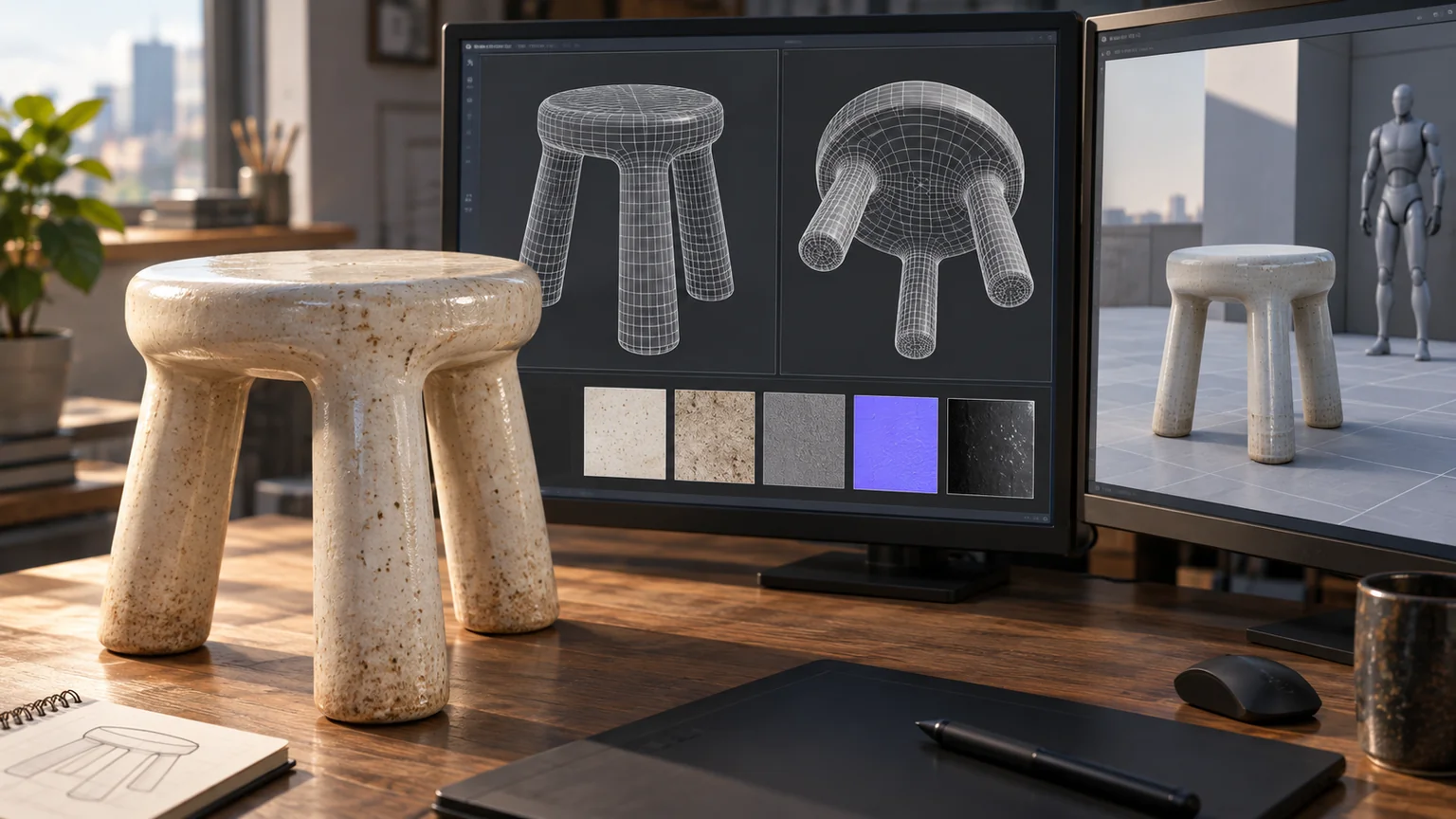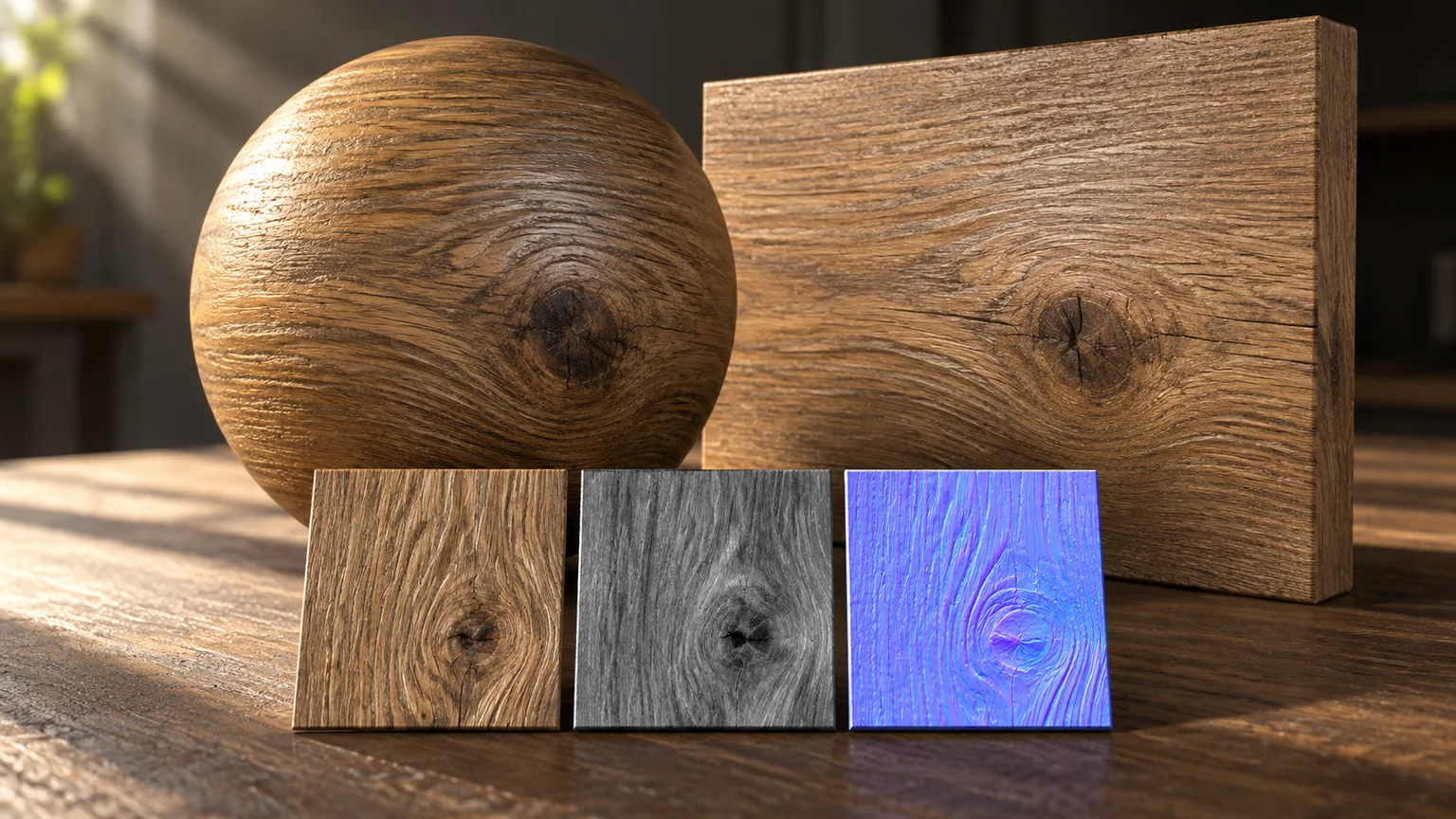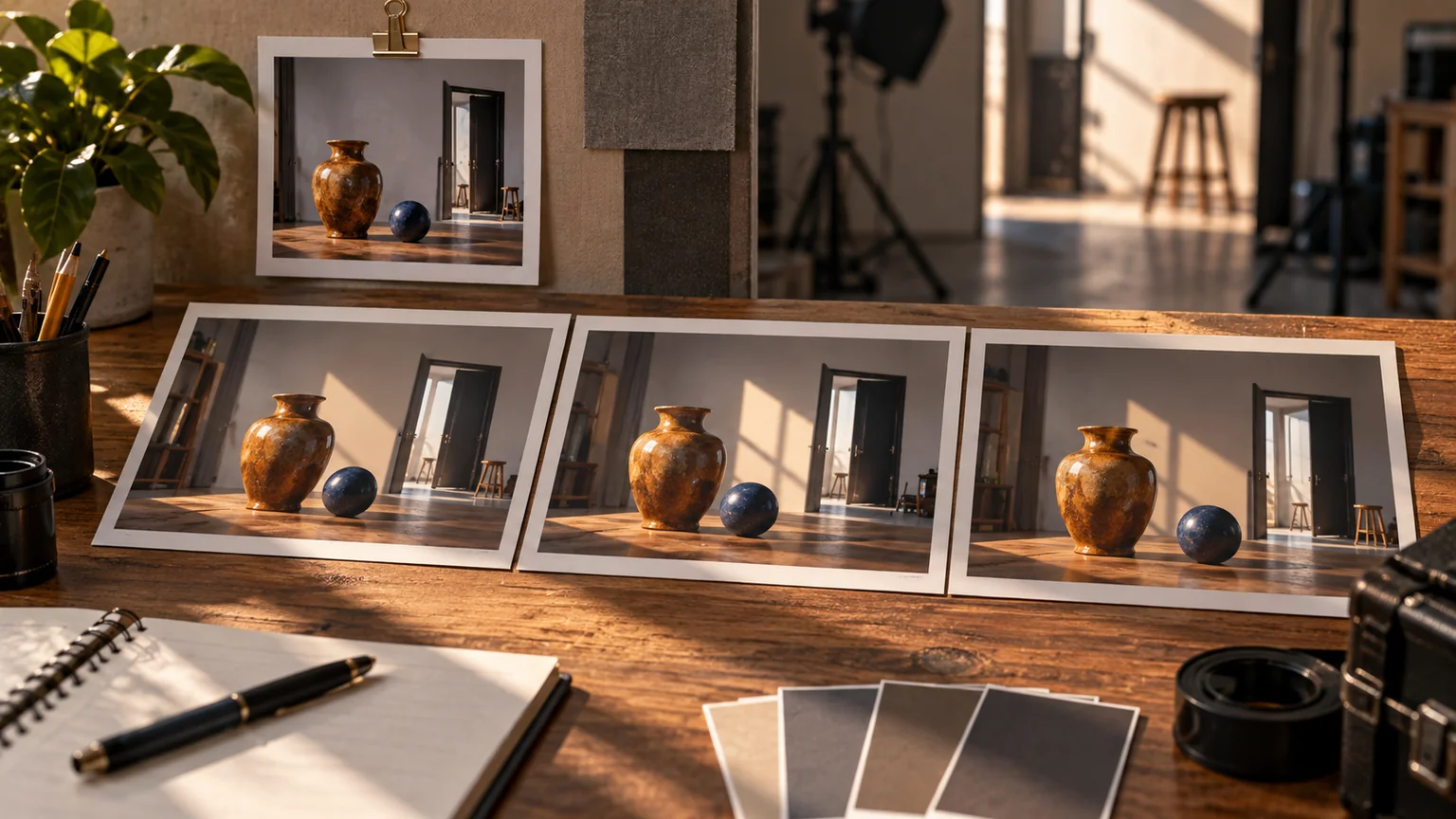
A compelling generated frame is an option. A finished piece needs continuity, editing, sound, delivery formats, and a reason for every choice.
The archive’s generative-media survey collected ambitious demonstrations across images, video, speech, and 3D. Its enthusiasm is worth keeping. Its sweeping claims that production barriers had disappeared are not. A demonstration shows what happened in that example; a production workflow must deliver the required result repeatedly.
Write the brief before the prompt
State the audience, message, placement, dimensions, and visual references. Identify which facts the image must represent accurately and which elements are illustrative.
For a building article, an editorial image can establish atmosphere. A construction diagram must preserve the actual geometry and labels. Do not use a persuasive generated picture as evidence that a building detail works.
Separate composition requirements from stylistic ones. A clear hierarchy makes revisions easier than an ever-longer paragraph of adjectives.
Build continuity deliberately
Choose a restrained palette, lighting direction, materials, and framing language for the project. Keep a record of prompts and approved references.
For a sequence, inspect the same objects across shots. Count windows, compare clothing, check hand placement, and follow the direction of movement. A beautiful individual image can break the story when an important object changes between frames.
Generate alternatives while the edit is flexible. Once a shot is approved, preserve the source asset and the exact version used.
Put human review where it matters
Review faces, text, geometry, logos, and accidental identifying details. If an asset represents a real person, establish the relevant permission before using their likeness or voice.
For factual material, compare the image with the source. For fictional work, make sure the depiction matches the intended tone and does not accidentally present itself as documentary evidence.
The new images in this publication network are editorial illustrations. They are not photographs of completed customer projects or records of research experiments.
Finish the asset for its destination
Crop deliberately for each placement rather than assuming one composition will survive every screen shape. Export sensible sizes, compress images, preserve legibility, and write useful alternative text.
For video, review the whole sequence at normal speed with sound. Check the opening, ending, transitions, captions, and any repeated artifacts. A contact sheet cannot prove that motion works.
Retain masters separately from delivery files. A website should not require every reader to download the original generation.
Evaluate new models against the same brief
The September 3, 2026 LLaDA-Image preprint describes an image-generation system conditioned through a frozen diffusion language model, including a Turbo variant with a small number of generation steps. These are recent author-reported results, not evidence that a studio’s own work will need fewer revisions.
Use the same approved brief and reference set when comparing a new model with the existing workflow. Include difficult cases: repeated objects, exact spatial relationships, small text, and a subject that must remain consistent across several frames. Judge each requirement separately before giving an overall preference.
Keep rejected outputs in the internal evaluation set. Comparing only selected favorites hides the number of attempts needed to reach a usable result.
Carry provenance through editing and delivery
The C2PA 2.3 AI and ML guidance provides ways to describe provenance associated with AI systems and their outputs. Its records can support an account of origin and processing; they do not independently establish that an image is true or that every underlying right is cleared.
Preserve the input reference IDs, model/version information available to the studio, prompt or brief revision, selected output, and subsequent human edits. Keep sensitive production details in the internal record while publishing the disclosure appropriate to the asset.
After cropping, upscaling, retouching, and export, inspect the actual final file. Confirm dimensions, color treatment, captions, and whether provenance metadata survived the toolchain. If a step strips metadata, retain a linked production record rather than claiming an intact embedded history. The acceptance decision belongs to the delivered asset, not the first attractive generation.
Evaluate the workflow, not the leaderboard
A provider’s strongest public example may not resemble your task. Compare tools using the same brief and include rejected attempts, revision time, and the cost of finishing.
A successful process leaves an editor with a coherent asset, a clear source record, and enough control to make a final correction. That is the useful promise of generative media: more room to explore, followed by the discipline to choose and finish.
Keep a good idea close.
Follow Signal Tower