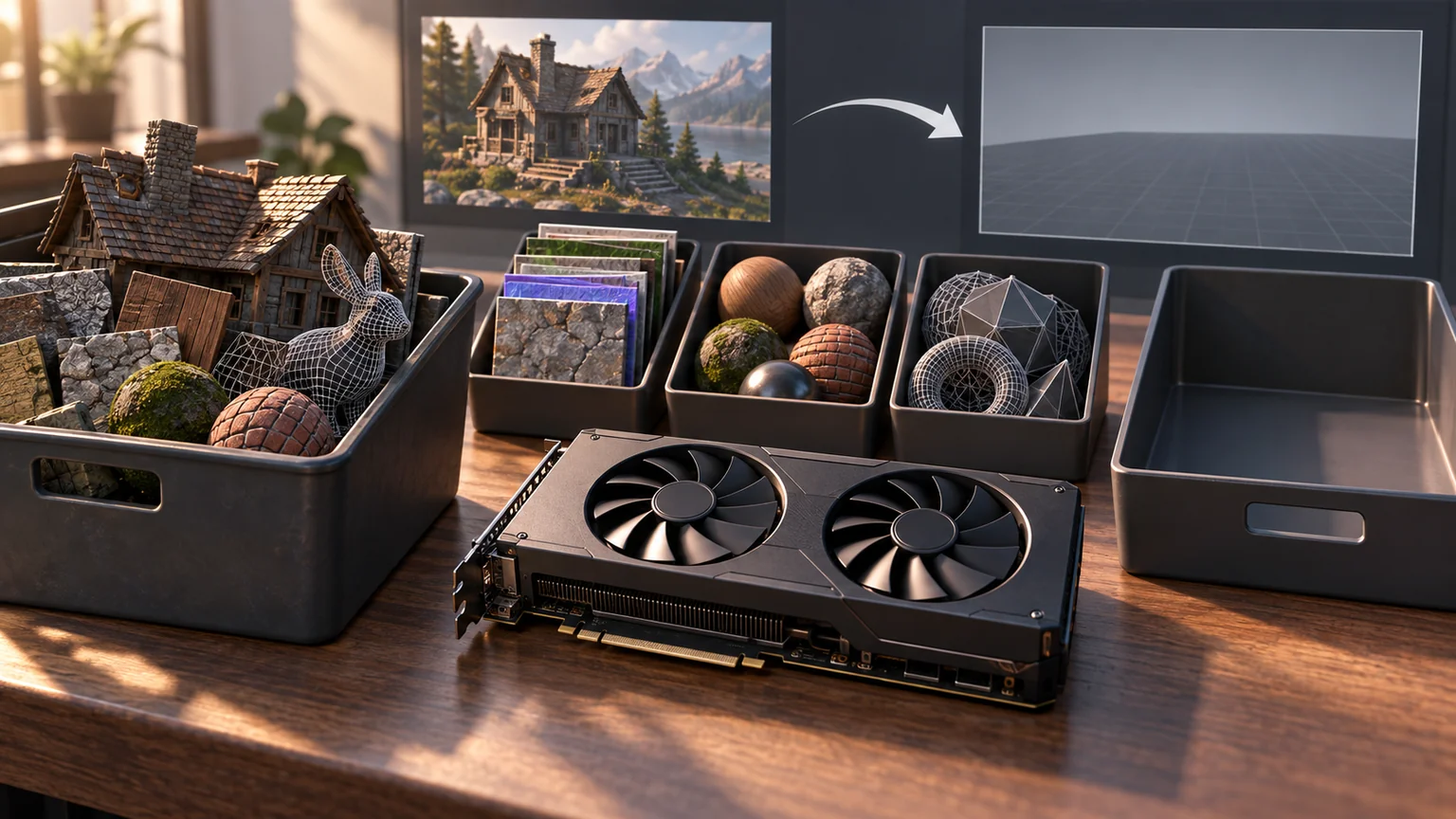
WebGPU, without the hype
Evaluate a WebGPU migration with feature detection, fallback tests, and the same reference scene. Measure the rendering workload before claiming a speed gain.
Read the storyFollow a thread / 10 stories
Make a little room for a new idea. Search the collection or follow a subject that interests you.
10 stories
Evaluate a WebGPU migration with feature detection, fallback tests, and the same reference scene. Measure the rendering workload before claiming a speed gain.
Read the storyCheck a 3D website before release with capability tests, physical-device trials, and visual evidence tied to the exact application and asset build.
Read the storyPlan a Three.js WebGPU rendering pipeline with explicit pass contracts and attachment budgets. Test new features in isolated, measurable experiments.
Read the storyTurn a visual reference into a PBR material you can check. Apply glTF material rules and compare surface channels together under consistent lighting.
Read the storyCompare Gaussian splats with measured CAD geometry. Review reconstruction methods alongside held-out camera checks and independent dimensional evidence.
Read the storyManage GPU memory through explicit resource ownership. Account for render attachments and loader lifetimes when diagnosing scene transitions in a web app.
Read the storyEstimate KTX2 texture memory after transcoding. Check GPU block formats, loader behavior, and image quality together across the texture delivery path.
Read the storyMake a mobile 3D page usable on target phones. Combine demand rendering, capability hints, and sustained interaction measurements on real devices.
Read the storyKeep procedural terrain consistent as tiles change. Version generated data, calculate partial updates, and compare optimized compute with a portable reference.
Read the storyUse shadows to make a 3D object easier to read. Tie updates to scene changes and evaluate temporal effects during movement, edits, and camera changes.
Read the storyTry a shorter search or choose another topic.
A place in your reading list
Follow Signal Tower in your favorite feed reader. No inbox required.